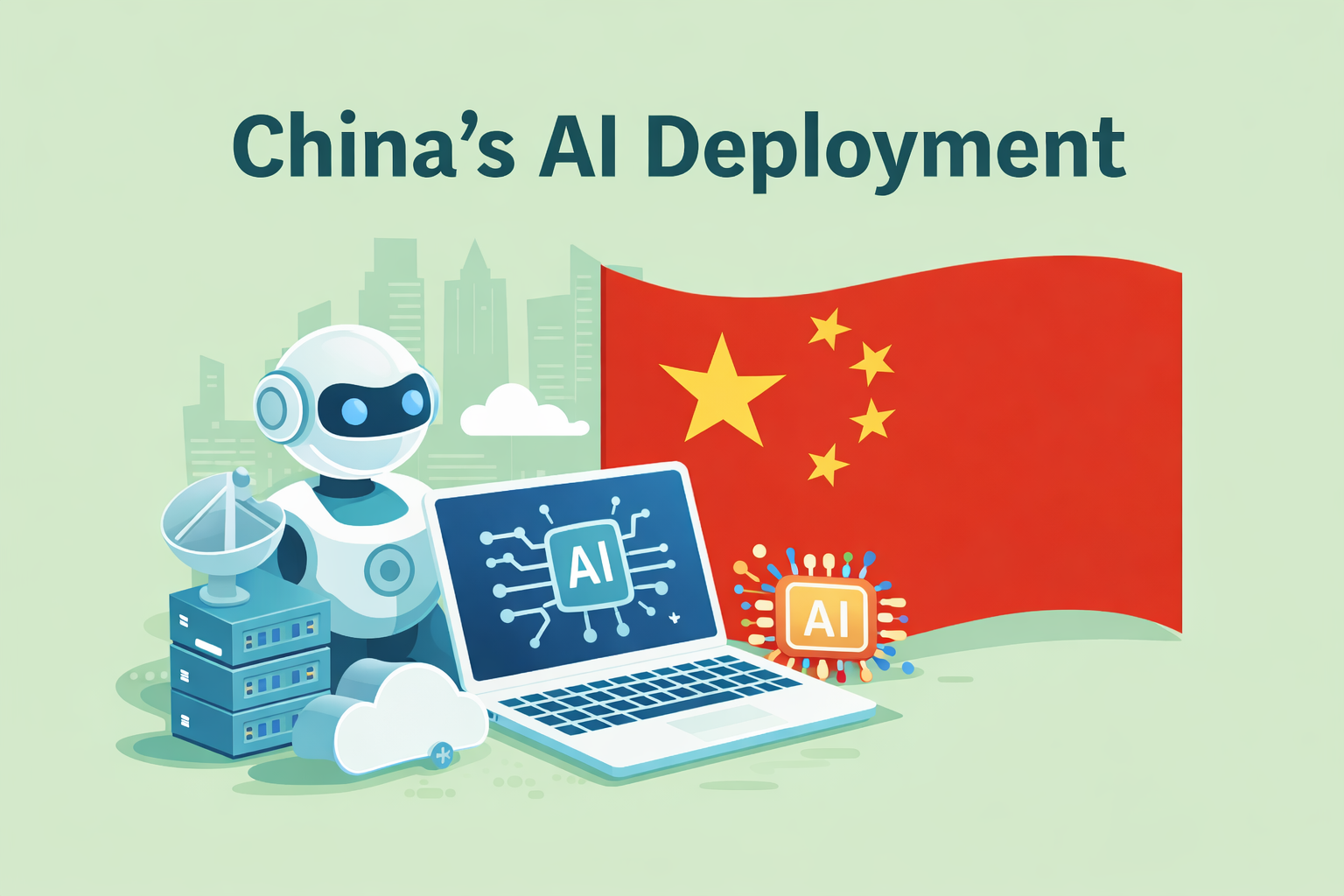
China has long relied on structured national plans to guide economic and technological development.
Every five years, the government releases a strategy that outlines priorities for industries, infrastructure, and emerging technologies.
Artificial intelligence has now become one of the most important areas within these plans.
The most recent strategy highlights how AI will influence sectors such as healthcare, manufacturing, transportation, agriculture, and national security.
Instead of treating AI as a single industry, policymakers are positioning it as a foundation for digital transformation across the entire economy.
Experts note that China is not only investing in research but also focusing on real world deployment.
Dr. Kai Fu Lee, AI investor and author, once explained the importance of large scale implementation.
“Countries that apply artificial intelligence across industries gain a major advantage because data, infrastructure, and talent start reinforcing each other.”
China’s approach reflects this idea.
Rather than concentrating solely on innovation labs, the government is encouraging companies, universities, and public institutions to integrate AI systems into everyday operations.
This article explores how the Five Year Plan defines national goals for artificial intelligence, what sectors are targeted, and how the strategy may influence global technology competition.
Understanding China’s National Planning System
What is a Five Year Plan
China’s Five Year Plans are economic development blueprints issued by the central government.
They set targets for growth, technological priorities, infrastructure development, and industrial policy.
The first plan was introduced in 1953, focusing on heavy industry.
Over time, these plans expanded to include innovation, sustainability, and digital technologies.
The current cycle places strong emphasis on artificial intelligence, semiconductor research, cloud computing, and data infrastructure.
According to the National Development and Reform Commission, the plan aims to build “world class technological capabilities while improving productivity across traditional industries.”
Why AI Became a National Priority
Artificial intelligence is considered a strategic technology because it influences multiple industries at once.
Governments recognize that advances in machine learning can improve logistics, medical diagnosis, manufacturing efficiency, and financial services.
China already hosts one of the world’s largest digital ecosystems.
With more than 1 billion internet users and extensive mobile payment adoption, the country generates enormous volumes of data.
Data is essential for training machine learning models.
A 2023 report from the Stanford AI Index estimated that China produces nearly 30 percent of global AI research publications.
This scale gives Chinese companies and research institutes access to large training datasets and talent pools.
Strategic Goals of the Plan
Expanding AI Across Key Industries
The Five Year Plan identifies several industries where artificial intelligence adoption will accelerate.
These sectors were chosen because they influence productivity, economic growth, and national competitiveness.
Major focus areas include:
• Advanced manufacturing
• Healthcare technology
• Smart transportation
• Financial services
• Agriculture and food supply chains
Each sector receives specific policy incentives, research funding, and pilot programs.
Improving Domestic Technology Independence
One of the long term goals is reducing reliance on foreign technology.
This includes developing domestic chip manufacturing, AI frameworks, and computing infrastructure.
According to China’s Ministry of Industry and Information Technology, the country aims to strengthen its local supply chain for high performance computing systems used in machine learning.
This effort also reflects broader geopolitical competition in semiconductor manufacturing and advanced computing.
AI Infrastructure Development
Building National Data Platforms
Artificial intelligence systems require large datasets for training and testing models.
The government is encouraging the creation of national data platforms that allow companies and research institutes to access curated datasets.
These platforms focus on areas such as healthcare imaging, traffic management, manufacturing operations, and agricultural production.
By sharing structured datasets, researchers can train models more efficiently while avoiding data fragmentation.
Expansion of Cloud Computing
Cloud computing is another essential component of AI infrastructure.
Companies such as Alibaba Cloud, Tencent Cloud, and Huawei Cloud are expanding large scale data centers to support machine learning workloads.
According to IDC research, China’s public cloud market reached nearly 40 billion dollars in 2025 and continues to grow rapidly.
Cloud systems allow companies to access computing power without building their own data centers.
This helps startups and smaller enterprises experiment with artificial intelligence tools.
National AI Computing Networks
The plan also promotes distributed computing networks designed to handle large AI training tasks.
These networks connect data centers across different regions to create a shared computing ecosystem.
Such infrastructure helps reduce costs and improves efficiency when training large language models or complex neural networks.
Sector by Sector AI Deployment
Manufacturing
China remains the world’s largest manufacturing economy.
The Five Year Plan aims to integrate AI driven robotics, predictive maintenance systems, and automated quality inspection into factories.
These technologies help reduce errors and improve production speed.
For example, computer vision systems can detect microscopic defects in electronics components that would be difficult for human inspectors to identify.
Healthcare
Artificial intelligence is also being used to support medical diagnostics.
Hospitals are experimenting with machine learning models that analyze medical images, including CT scans and X rays.
These systems can help doctors identify potential diseases earlier.
The National Health Commission has approved multiple pilot projects involving AI assisted diagnosis tools in hospitals across major cities.
Transportation
Smart transportation systems use AI to analyze traffic flow and reduce congestion.
Several Chinese cities have deployed AI powered traffic lights that adapt to real time road conditions.
These systems rely on sensors, cameras, and machine learning algorithms to optimize signal timing.
Research from Tsinghua University indicates that AI traffic systems can reduce urban congestion by up to 15%.
Agriculture
Agriculture is another sector receiving attention.
Farmers are adopting AI tools that monitor soil conditions, crop health, and weather patterns.
Drones equipped with imaging sensors can detect early signs of plant disease or nutrient deficiencies.
This technology allows farmers to apply fertilizer or irrigation more precisely.
Education and Talent Development
Expanding AI Education
The success of large scale deployment depends on skilled professionals.
Chinese universities are increasing AI related courses and research programs.
Many institutions now offer degrees in machine learning, data science, robotics, and intelligent systems.
In addition, the government encourages partnerships between universities and technology companies.
Students gain practical experience working on industry projects while completing their studies.
Attracting Global Talent
China has also introduced programs designed to attract international researchers and engineers.
These initiatives provide funding, laboratory resources, and collaborative research opportunities.
Talent mobility remains an important factor in global AI development.
Countries that attract skilled engineers and scientists tend to accelerate innovation cycles.
Regulation and Ethical Considerations
Managing AI Risks
Artificial intelligence systems can introduce ethical challenges.
These include privacy concerns, algorithmic bias, and security risks.
China has introduced regulatory frameworks that require companies to follow guidelines for responsible AI deployment.
For example, generative AI services must undergo security reviews before public release.
Balancing Innovation and Oversight
Policymakers are attempting to balance rapid technological progress with public safety.
Clear regulations provide companies with predictable guidelines while addressing potential misuse of advanced technologies.
Global Impact
Competition in AI Leadership
Artificial intelligence has become a central area of competition among major economies.
The United States, China, and the European Union are investing heavily in research, infrastructure, and policy frameworks.
China’s strategy emphasizes rapid deployment and industrial integration.
This approach contrasts with models that prioritize private sector innovation or regulatory oversight.
Opportunities for Collaboration
Despite competition, international cooperation remains possible in areas such as healthcare research and climate modeling.
AI systems can help analyze large environmental datasets and predict climate patterns.
Collaborative projects between research institutions may accelerate solutions to global challenges.
Challenges Ahead
Technical Limitations
Even with strong government support, AI deployment faces technical obstacles.
Machine learning models require massive computing power and high quality data.
Errors in data labeling or insufficient datasets can reduce model accuracy.
Economic and Social Effects
Automation may also affect employment patterns.
As factories and logistics systems adopt AI powered robotics, workers may need new skills or training programs.
Governments and companies must address workforce transitions through education and reskilling initiatives.
Conclusion
China’s Five Year Plan demonstrates how national policy can guide the development and application of emerging technologies.
Artificial intelligence is no longer confined to research laboratories.
It is becoming integrated into manufacturing lines, hospitals, transportation systems, and agricultural operations.
The plan reflects a long term vision of building digital infrastructure, expanding education, and encouraging innovation across industries.
The success of this strategy will depend on several factors including talent development, technological independence, and ethical governance.
As global competition intensifies, the outcomes of these initiatives will influence how artificial intelligence shapes the global economy over the coming decades.
Frequently Asked Questions
1. What is the main goal of China’s AI strategy
The main objective is to integrate artificial intelligence across industries such as healthcare, manufacturing, transportation, and agriculture to improve productivity and innovation.
2. How does the Five Year Plan support AI development
The plan provides funding, research programs, infrastructure investment, and policy support to accelerate the adoption of AI technologies.
3. Why is data important for artificial intelligence
Machine learning models learn patterns from large datasets.
More data allows algorithms to recognize patterns and improve prediction accuracy.
4. What industries will benefit most from AI deployment
Manufacturing, healthcare, transportation, finance, and agriculture are expected to experience significant transformation through AI applications.
5. How is China training AI professionals
Universities are expanding programs in machine learning, robotics, and data science while partnering with technology companies for research projects.
6. What role does cloud computing play in AI
Cloud platforms provide scalable computing power that companies use to train and run machine learning models without building their own data centers.
7. Are there regulations for artificial intelligence in China
Yes. Regulations address areas such as data security, algorithm transparency, and generative AI oversight.
8. How does AI affect global technology competition
Countries investing heavily in AI research and deployment may gain advantages in economic productivity, technological innovation, and strategic capabilities.