What has changed is how quickly decisions need to be made. Campaigns that once took days to optimize now need hourly adjustments. That is where smart automation earns its place.
Pay-per-click marketing has always been a numbers game. Budgets, bids, keywords, creatives, conversions, and constant testing.
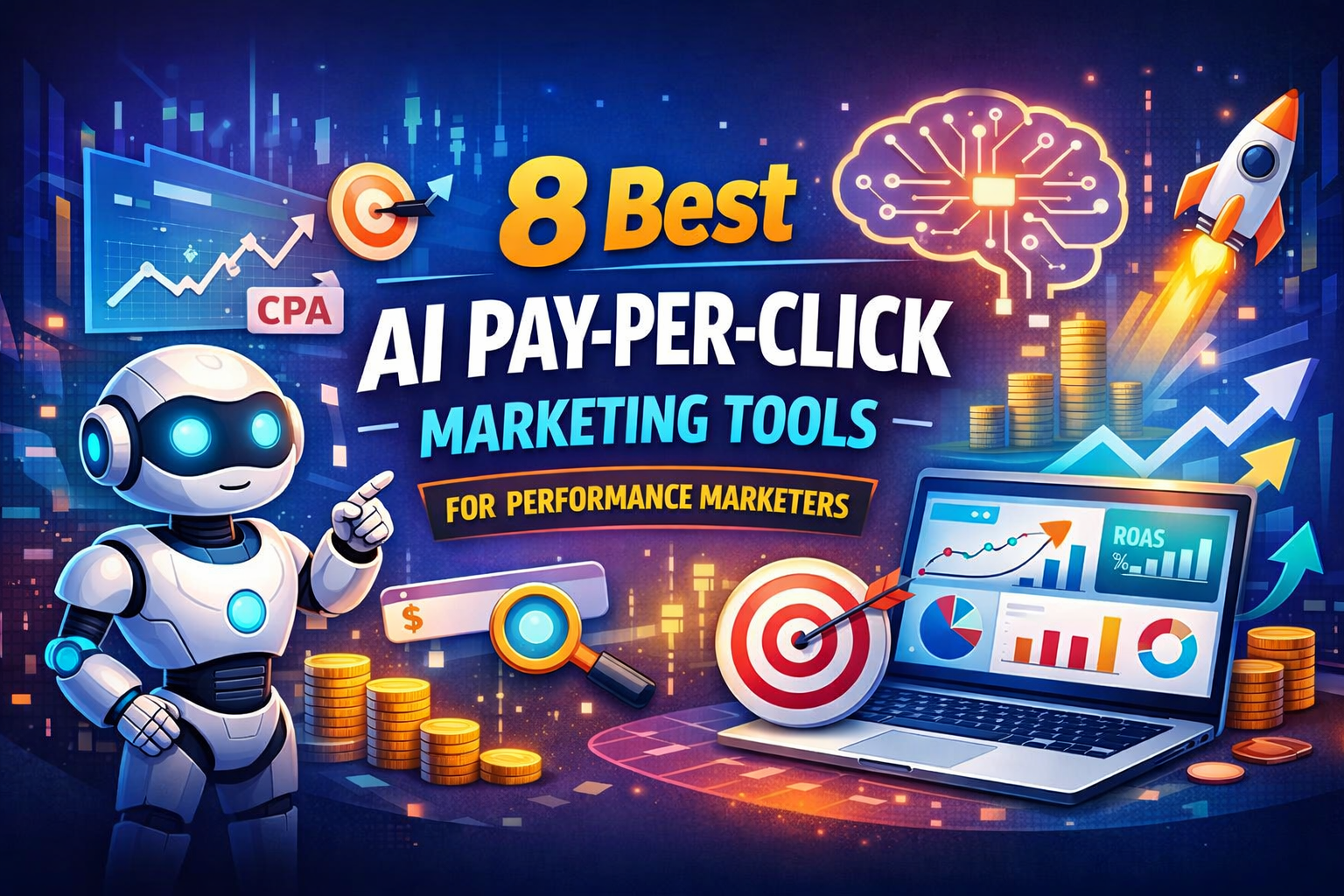
This guide breaks down the 8 best tools performance marketers actually trust, explains how they work, and shows where each one fits into a real PPC workflow.
You will also find expert insights, simple explanations of technical concepts, and practical examples you can apply immediately.
Why AI Matters in PPC (Without the Hype)
Before jumping into tools, it helps to understand what AI really does in paid advertising.
AI in PPC is not about replacing marketers. It is about processing massive data sets faster than humans can.
Think of AI as a tireless analyst that:
Spots patterns across thousands of keywords
Adjusts bids based on real-time signals
Predicts which ads are likely to convert
Flags wasted spend before it burns your budget
According to Statista, over 80% of digital advertisers now use some form of automated bidding or AI-based optimisation in paid campaigns. That adoption is driven by results, not trends.
As PPC strategist Brad Geddes once said,
“Automation does not make strategy irrelevant. It makes strategy more important.”
With that context, let us explore the tools that get this balance right.
1. Google Ads Smart Bidding
What it does
Google Ads Smart Bidding uses machine learning to set bids automatically for each auction.
It evaluates signals like device, location, time of day, audience intent, and historical behaviour before deciding how much to bid.
Why performance marketers use it
Smart Bidding works directly inside the Google Ads ecosystem, which means it has access to deep intent data.
Popular bid strategies include:
Target CPA for cost control
Target ROAS for revenue-driven campaigns
Maximize Conversions for scaling
For ecommerce brands and lead generation campaigns, this often results in higher conversion volume with less manual tweaking.
Practical example
An ecommerce brand selling fitness equipment switched from manual bidding to Target ROAS.
After 30 days of learning, the account saw a 22% increase in return on ad spend, according to internal Google case studies.
Best for
Google Search and Shopping campaigns
Marketers with enough conversion data
Teams that want less manual bid management
2. Microsoft Advertising Automated Bidding
What it does
Microsoft Advertising offers AI-powered bidding similar to Google, but optimized for Bing, Yahoo, and partner networks.
It uses audience and intent signals unique to Microsoft properties like LinkedIn data.
Why it matters
While Bing traffic is smaller, it often delivers higher conversion rates in B2B and high-ticket niches.
Automated bidding here helps marketers tap into that efficiency without extra workload.
Simple explanation
If Google Ads is a crowded highway, Microsoft Ads is a smoother side road with fewer competitors and cheaper clicks.
AI helps you drive that road efficiently.
Best for
B2B marketers
SaaS and enterprise services
Performance teams running multi-network PPC
3. Optmyzr
What it does
Optmyzris a PPC optimization platform built specifically for professionals managing complex accounts.
It combines automation with rule-based controls so marketers stay in charge.
Key features
One-click optimizations
Budget pacing automation
Quality Score analysis
Script-based workflows without coding
Expert insight
Frederick Vallaeys, former Google Ads evangelist, explains it well:
“The future of PPC is not full automation. It is better automation with smarter human oversight.”
Best for
Agencies managing multiple clients
Advanced Google Ads users
Teams that want flexibility and control
4. WordStream Advisor
What it does
WordStreamAdvisor focuses on simplifying PPC for small and mid-sized businesses.
Its AI scans accounts and suggests weekly optimizations based on performance trends.
Why marketers like it
Not every team has time for deep daily analysis. WordStream highlights the most impactful actions first.
That includes:
Keyword waste detection
Ad copy improvement suggestions
Budget reallocation alerts
Real-world impact
According to WordStream benchmarks, advertisers using guided optimizations reduce wasted spend by up to 25 percent within the first two months.
Best for
Small businesses
Solo performance marketers
Teams with limited PPC experience
5. Adzooma
What it does
Adzooma provides AI-driven recommendations across Google Ads, Microsoft Ads, and Facebook Ads.
It focuses on actionable insights rather than raw data.
What makes it useful
Adzooma prioritizes recommendations by estimated impact, helping marketers decide what to fix first.
It also provides performance scoring so you can benchmark progress.
Simple explanation
Instead of drowning in metrics, Adzooma answers one question clearly:
“What should I do next to improve results?”
Best for
Cross-platform advertisers
Growing ecommerce brands
Marketers who value clarity over complexity
6. Albert.ai
What it does
Albert.ai is a fully autonomous AI marketing platform.
It handles audience targeting, creative testing, bidding, and budget allocation with minimal human input.
Why it stands out
Albert.ai is designed for brands that want AI to run campaigns end to end.
It continuously tests variables and reallocates spend based on performance signals.
Caution for marketers
This level of automation requires trust and strong tracking foundations.
It works best when goals, creatives, and data pipelines are clearly defined.
Best for
Large ecommerce brands
Performance-driven organizations
Teams comfortable with hands-off optimization
7. Revealbot
What it does
Revealbot specializes in rule-based automation for Facebook, Google, Snapchat, and TikTok ads.
It uses AI-assisted logic rather than black-box automation.
Why professionals prefer it
Revealbot lets marketers define conditions like:
Increase budget if ROAS exceeds target
Pause ads when CPA crosses a threshold
Scale winning ad sets automatically
Example use case
A DTC brand uses Revealbot to scale Facebook campaigns overnight based on ROAS triggers, saving hours of manual checks daily.
Best for
Paid social specialists
Teams running aggressive scaling strategies
Marketers who want transparency in automation
8. Acquisio
What it does
Acquisio uses machine learning to optimize bids and budgets across paid search and display campaigns.
Its standout feature is budget allocation across channels based on performance.
Why it matters
Instead of managing campaigns in silos, Acquisio looks at the full paid media picture.
It shifts spend where conversions are strongest.
Supporting data
Industry reports show that cross-channel budget optimization can improve conversion efficiency by 15 to 20 percent when compared to isolated campaign management.
Best for
Agencies
Multi-channel advertisers
Teams focused on ROI efficiency
How to Choose the Right AI PPC Tool
Not every tool fits every marketer. Use this quick framework.
Ask yourself:
Do I want full automation or assisted optimization
How complex are my campaigns
Which ad platforms matter most to my business
How much control do I want over decisions
Start with one tool, test it for 30 to 60 days, and measure results against clear KPIs.
Common Technical Terms Explained Simply
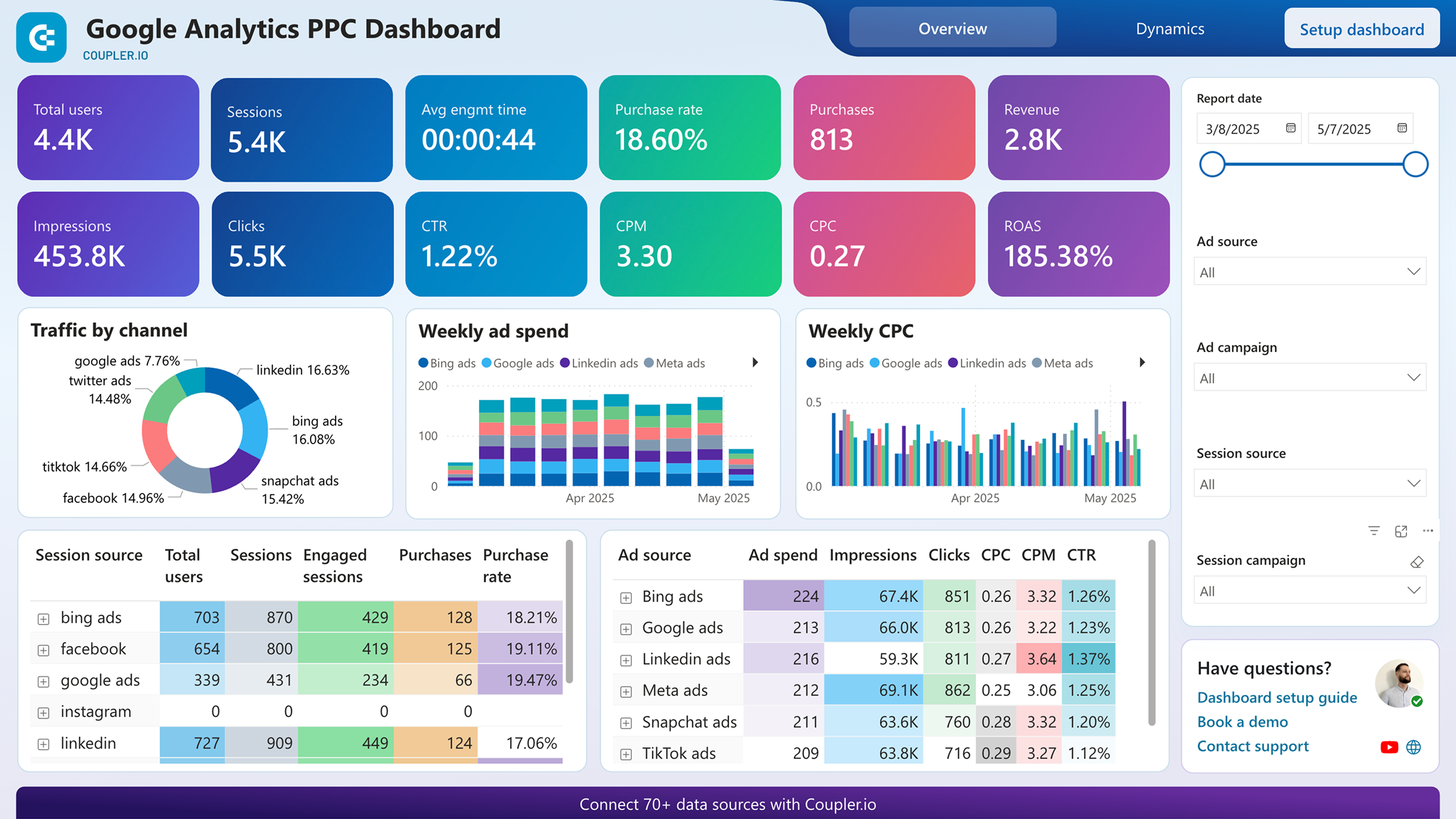
Smart Bidding An automated bidding method that adjusts bids in real time based on conversion probability.
ROAS Return on ad spend. Revenue divided by ad cost.
CPA Cost per acquisition. How much do you pay for one conversion.
Learning Phase The period when AI systems collect enough data to optimise accurately.
FAQs
1. Are AI Pay-Per-Click Marketing Tools suitable for small businesses?
Yes. Tools like WordStream and Adzooma are designed specifically for small teams with limited resources.
2. How much data is needed for AI bidding to work?
Most platforms recommend at least 30 to 50 conversions per month for stable learning.
3. Can AI tools replace PPC managers?
No. They automate execution, not strategy, messaging, or business decisions.
4. Do AI tools work across all industries?
They perform best in industries with consistent conversion data like ecommerce, SaaS, and lead generation.
5. Is manual bidding still relevant?
Manual bidding works for niche campaigns, but it struggles to scale efficiently.
6. How long does it take to see results?
Most tools need 2 to 4 weeks to exit the learning phase and show measurable improvement.
7. Are these tools expensive?
Costs vary. Some are free with ad platforms, others charge monthly or percentage-based fees.
8. Which tool is best for agencies?
Optmyzr, Acquisio, and Revealbot are popular among agencies managing multiple accounts.
Final Thoughts
The real value of AI Pay-Per-Click Marketing Tools lies in focus.
They remove repetitive tasks so marketers can spend more time on strategy, creative testing, and growth planning.
Used wisely, these tools do not replace expertise. They amplify it.
If performance is your priority, AI is no longer optional. It is part of the modern PPC toolkit.