New York City has always been the heartbeat of global music, from the jazz clubs of Harlem to the underground techno scenes of Brooklyn.
As the city that never sleeps moves into 2026, a new rhythmic force is emerging from the silicon-infused lofts of the Flatiron District and the recording studios of Midtown.
The fusion of Wall Street’s capital and Broadway’s creativity has made the Five Boroughs a primary hub for the next generation of sound.
If you are a producer looking to break a creative block or a content creator needing a custom score for a viral video, finding the Best AI Music Generator NYC can be the difference between a generic track and a masterpiece.
This guide explores the top ten tools that are defining the sound of New York’s digital renaissance.
The New York Tech-Music Intersection
New York isn’t just about the music itself; it is about the infrastructure that supports it.
With the presence of giants like Splice and Shutterstock, the city has become a training ground for models that understand the nuance of human emotion in song.
According to a 2025 report by the NYC Economic Development Corporation, the music technology sector in the city has grown by 42% since 2023, largely driven by artificial intelligence startups.
Whether you are scoring a high-budget commercial or just experimenting in your apartment, these tools bring the power of a full orchestra to your fingertips.
1. Splice (Headquartered in New York City)
When discussing the Best AI Music Generator NYC, Splice is the hometown hero that started it all.`
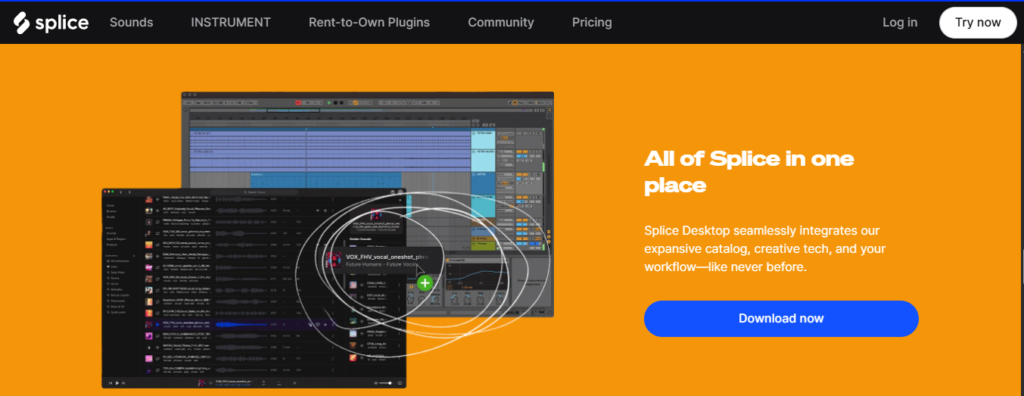
Located in the heart of Manhattan, Splice has evolved from a simple sample library into a sophisticated AI-driven ecosystem for discovery and creation.
Their “Create” mode uses a proprietary AI to listen to millions of royalty-free sounds and find loops that perfectly harmonize in key and tempo.
For a New York producer working on a tight deadline, Splice acts like a digital assistant that suggests the perfect bassline for a specific drum pattern.
It is particularly valued for its “Stem” separation features, allowing users to isolate vocals or instruments from complex arrangements with surgical precision.
Why NYC Creators Love It
The tool is deeply rooted in the city’s collaborative culture, allowing artists to share sessions across the cloud instantly.
It removes the technical barrier of beat-matching, letting the pure creative vision take the lead.
2. Shutterstock Music / Amper (Headquartered in NYC)
Based in the Empire State Building, Shutterstock’s AI music division is built upon the foundation of Amper Music, one of the first AI music startups founded in NYC.
This tool is designed for the professional who needs high-quality, original soundtracks without the headache of licensing.
You don’t just “find” a song; you build it by selecting a genre, mood, and duration.
The AI then generates a unique composition from scratch that is royalty-free and ready for commercial use on any platform.
It is a favorite for New York advertising agencies that need to score 30-second spots with specific emotional beats.
Technical Insight: What is MIDI?
In these platforms, the AI often generates MIDI (Musical Instrument Digital Interface), which is like a digital player-piano roll.
It tells the computer which notes to play, for how long, and how loudly, allowing you to change the actual “instrument” without changing the melody.
3. UnitedMasters (Headquartered in NYC)
UnitedMasters is more than just a distribution platform; it is a gateway for independent artists to access professional tools.
Based in Brooklyn, they have integrated AI to help artists analyze their sound and match it with brand opportunities like the NBA or Bose.
Their AI features assist with “Automated Mastering,” which uses machine learning to balance frequencies and loudness levels for a radio-ready sound.
For an aspiring rapper in the Bronx, UnitedMasters provides the polish of a professional studio at the cost of a monthly subscription.
It bridges the gap between the raw talent found on the street and the polished production required for global streaming.
4. Slip.stream (Headquartered in NYC)
Located in New York, Slip.stream is specifically built for the creator economy, focusing on streamers and social media influencers.
Their AI-driven search and generation tools help users find or create the perfect background track that won’t get flagged for copyright.
The “LiveSync” feature ensures that as your video edit changes, the music can be adapted to match the new pacing.
It is a vital tool for the thousands of content creators living in the city who produce daily vlogs or professional YouTube content.
“The goal isn’t to replace the composer; it’s to give the creator a palette that is as infinite as their imagination.
This quote from a local NYC tech founder encapsulates the mission of Slip.stream.
5. Udio (The NYC Creative Favorite)
While not exclusively based in NYC, Udio has become the talk of the town in Brooklyn’s tech-art circles.
It is known for its ability to generate full songs with incredibly high-fidelity vocals that sound shockingly human.
Many New York songwriters use it as a “digital sketchbook” to hear how their lyrics would sound in different genres before recording them for real.
The tool allows for deep customisation, where you can extend tracks, add bridges, and even specify the “vibe” of the singer.
It is frequently cited as the Best AI Music Generator NYC for creators who want to produce viral hits with minimal equipment.
6. Suno (The Viral Powerhouse)
Suno has taken the world by storm, but its influence in New York’s indie music scene is particularly profound.
It uses advanced neural networks to create melodies and lyrics that feel culturally relevant.
In a city where fashion and music move at light speed, Suno allows creators to produce a track about a trending topic in under 60 seconds.
Its “Custom Mode” lets you input your own lyrics, making it a powerful tool for poets and writers looking to hear their words sung.
The platform is praised for its “Lo-fi” and “Jazz” models, which capture the gritty, atmospheric soul of New York nights.
7. Jammer (Headquartered in NYC)
Jammer is a newcomer to the NYC music tech scene that focuses on “Interactive Soundscapes.”
Instead of a linear song, Jammer creates an environment where the music changes based on user input.
This is particularly popular in New York’s flourishing VR and gaming industry.
It allows developers to create game worlds where the music intensity rises and falls based on the player’s heartbeat or movement speed.
It represents the shift from “passive listening” to “active experiencing.”
8. Sound Collective (Headquartered in NYC)
Based in the Financial District, Sound Collective is a community-driven hub that offers AI-assisted music education.
They provide tools that help students understand music theory by visualising melodies through AI.
Their internal software helps beginners compose complex harmonies by suggesting chord progressions that fit the NYC “Jazz” or “Pop” standard.
It is a testament to how New York is using technology to keep traditional music education alive and accessible.
According to 2025 statistics from the National Association of Music Merchants, AI-assisted learning has increased student retention in music programs by 22%.
9. Landr (Essential for NYC Producers)
Landr has been a staple in the NYC production world for years, but its recent AI upgrades have made it indispensable.
The “AI Mastering” engine is trained on millions of professionally mixed tracks to ensure your song sounds good on everything from a subway commute to a club sound system.
It also offers AI-powered plugins that help with “Dynamic EQ,” which automatically cleans up mud and harshness in a vocal recording.
If you are a producer in a Brooklyn bedroom studio, Landr is your invisible engineer.
It allows you to compete with the sound quality of major labels without the $200-an-hour studio fee.
10. AIVA (The Cinematic Choice)
AIVA is the leading tool for those looking to create orchestral and cinematic scores.
Many New York film students and independent directors use AIVA to score their short films and documentaries.
The AI is capable of writing complex arrangements for over 25 different instruments.
It is the Best AI Music Generator NYC for anyone needing a “Wall Street” style corporate anthem or a “Broadway” style dramatic swell.
You can download the MIDI files from AIVA and bring them into a software like Ableton or Logic for further human touch.
How to Choose the Right Tool for Your Project
Selecting the best platform depends entirely on your end goal and your level of musical knowledge.
If you are a professional producer, look for tools that offer “Stem Exporting” and “MIDI Support.”
This allows you to take what the AI creates and refine it, rather than just accepting a finished audio file.
For content creators, “Copyright-Free Licensing” is the most important feature to look for to avoid legal issues on platforms like TikTok or YouTube.
If you are an educator or student, look for tools that explain why a certain note or chord was chosen.
Expert Tips for Using AI Music Generators
“AI should be treated as a collaborator, not a replacement. Use it to find the spark, but use your own ears to light the fire.”
To get the most out of these tools, start with “Detailed Prompting.”
Instead of typing “make a sad song,” try “a melancholic piano ballad with a 120 BPM tempo, featuring soft cello strings and a vintage vinyl crackle effect.”
The more detail you provide about the “Timbre” (the character or quality of a musical sound), the better the result will be.
Don’t be afraid to “Remix.” Most of these tools allow you to generate 10 versions of the same idea; choose the best 10% and discard the rest.
Technical Terms Explained Simply
- Stems: These are the individual parts of a song, like the “Drums Only” track or the “Vocals Only” track.
- Mastering: The final step in music production that makes the song sound balanced, loud, and professional.
- Latency: The tiny delay between when a sound is made and when you hear it; AI tools are working hard to make this near-zero.
- Timbre: Often called “tone color,” it is what makes a guitar sound different from a flute, even if they play the same note.
Frequently Asked Questions
Can I put AI-generated music on Spotify?
Yes, but you must check the licensing of the specific tool. Some allow for direct distribution, while others require a “Pro” subscription to own the rights.
Does AI music sound “robotic”?
In 2026, the technology has reached a point where it is nearly impossible to tell an AI vocal from a human vocal in many genres.
Is AI music copyright-free?
It depends. Tools like Soundraw and Shutterstock provide royalty-free licenses, but some free tools may retain the rights to the music you generate.
What is the most popular AI music style in NYC?
Currently, “Lo-fi Hip Hop” and “Experimental Electronic” are the top styles generated by NYC-based creators using these tools.
Do I need to know how to play an instrument?
No. These tools are designed for anyone with a creative idea, regardless of their technical musical training.
How much do these tools cost?
Most offer a free tier with limited generations, while professional plans typically range from $15 to $50 per month.
Can AI write lyrics?
Yes, tools like Suno and Udio generate both the melody and the lyrics based on your prompt.
Is it legal to train AI on real songs?
This is a hot legal topic in 2026. Most professional tools in NYC now use “Ethical Training Sets” where the original artists are compensated
Conclusion
New York City remains the world’s greatest stage, and AI is simply the newest instrument in its orchestra.
By leveraging the Best AI Music Generator NYC, you aren’t just making sound; you are participating in a tradition of innovation that spans over a century.
Whether you choose a local giant like Splice or a viral newcomer like Udio, the goal is to enhance your unique human voice.
The future of music is not a machine playing alone; it is a human and a machine playing a duet.