Technology is moving closer to the physical world. We are entering a time where buildings, machines, factories, and even humans can have a smart digital version that learns, updates, and reacts in real time.
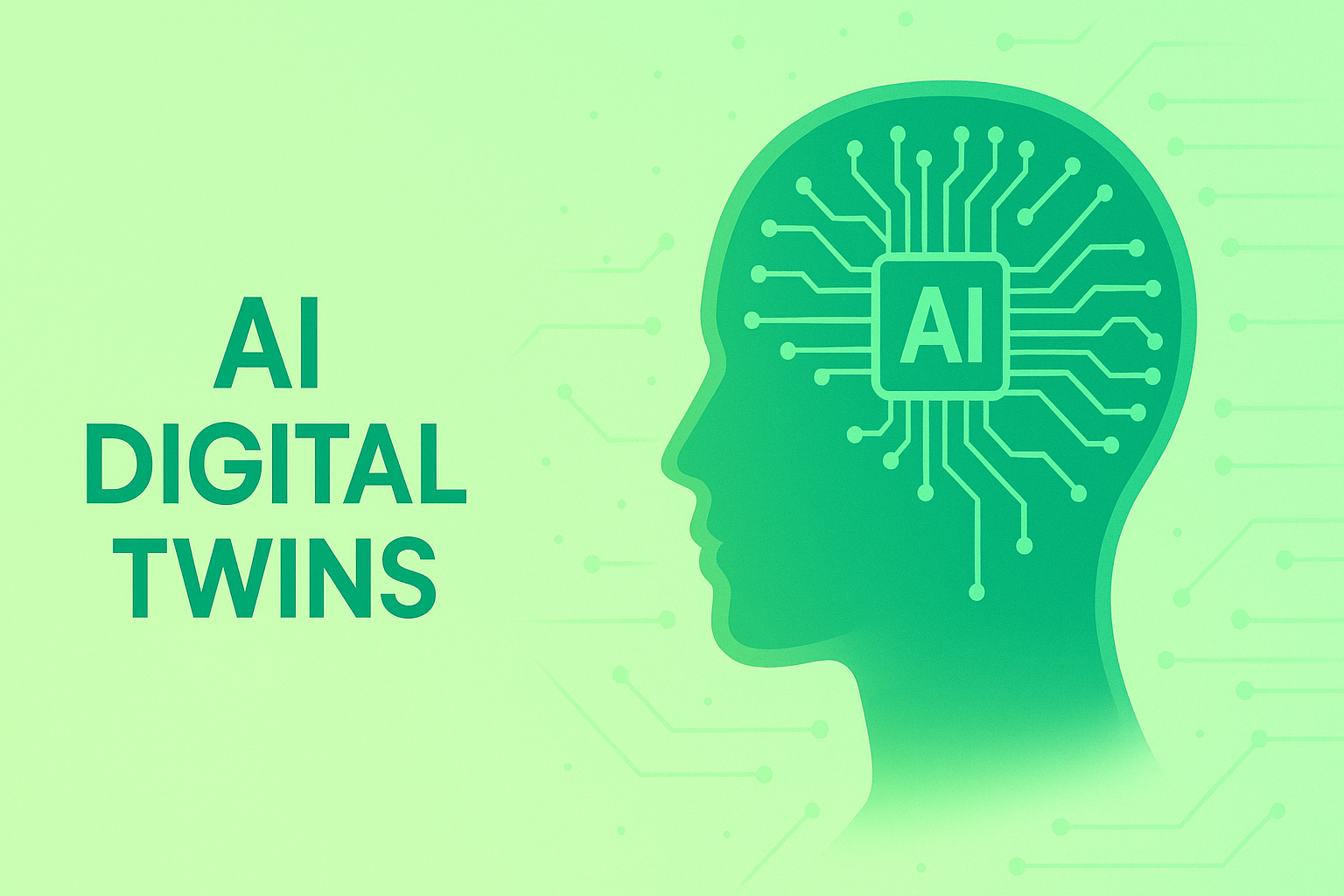
This digital version is known as an AI Digital Twin.
AI Digital Twins are becoming one of the most important technologies for manufacturing, healthcare, real estate, logistics, and everyday consumer products.
They help predict problems, simulate outcomes, improve performance, and reduce cost long before something happens in the real world.
If you have ever wondered how modern companies reduce failures, improve quality, speed up production, or optimize large systems, AI Digital Twins are often at the heart of it.
This guide explains the entire concept in simple language, with clear examples and real world applications.
Introduction to AI Digital Twins
An AI Digital Twin is a smart virtual model of a physical object, system, or process.
It behaves almost like the real thing because it uses artificial intelligence, live data, and simulations to mirror the real world.
Think of it as a living digital clone that can:
Learn
Predict
Analyze
Improve
Optimize
The goal is to understand how something behaves and what will happen next without taking real world risks.
AI Digital Twins help businesses solve problems before they appear.
What Exactly Is an AI Digital Twin
A Digital Twin was originally just a digital copy of something physical.
But when artificial intelligence is added, it becomes far smarter.
An AI Digital Twin is a virtual model that is constantly updated with real time data. It uses AI to understand patterns, test outcomes, and provide accurate predictions.
The AI model continuously learns from:
Sensors
Machine data
User behavior
Environmental changes
Operational data
This makes the twin smarter over time.
Simply put, an AI Digital Twin is not a static 3D model.
It is a digital brain that tracks everything happening in the physical world.
How AI Digital Twins Work
AI Digital Twins operate through a combination of technologies that work together to mirror the physical asset.
Here is a clear breakdown.
1. Physical Object or System
This is the real thing being monitored.
It may be:
A car
A wind turbine
A human body
A manufacturing machine
A building
A supply chain system
Anything that produces data can have a digital twin.
2. Sensors That Collect Data
Sensors collect real time information such as:
Temperature
Pressure
Movement
Energy use
Performance metrics
Environmental conditions
This data is sent directly to the twin.
3. Data Processing and AI Modeling
The AI engine analyzes patterns, learns behavior, and identifies changes.
It finds hidden problems or inefficiencies that humans might miss.
4. Simulation Layer
This is where the magic happens.
AI simulates different scenarios such as:
What if the machine overloads
What if energy usage increases
What if a building gets too hot
What if traffic doubles
What if a person changes lifestyle habits
It predicts outcomes in a safe virtual space.
5. Continuous Updates
The twin updates second by second.
This makes it almost identical to the real world version.
Over time, it becomes more accurate and smarter.
Benefits of AI Digital Twins
AI Digital Twins offer major advantages for companies and individuals.
Here are the biggest benefits explained simply.
1. Predicts Problems Before They Happen
This is the most powerful feature.
AI can detect early signs of:
Wear and tear
Overheating
System failure
Performance drops
This saves companies millions in repair and downtime.
2. Improves Efficiency and Performance
The AI suggests:
How to reduce energy
How to optimize production
How to reduce waste
How to increase speed
Everything becomes smoother and more efficient.
3. Cuts Costs
AI Digital Twins reduce:
Maintenance cost
Manual testing cost
Production cost
Testing materials
Operational failures
Businesses prefer digital testing over physical risk.
4. Enhances Safety
AI Digital Twins help forecast dangerous situations.
For example:
A digital twin of an airplane engine can detect fire risk.
A digital twin of a bridge can detect structural weaknesses.
A digital twin of a patient can detect health risks.
This leads to stronger safety systems.
5. Better Decision Making
Instead of guessing, companies make decisions based on real data and simulations.
This increases accuracy and reduces business risk.
6. Faster Product Development
Before building a real product, companies test it using digital twins.
This reduces:
Testing time
Prototype cost
Market launch delays
Brands like Tesla and Apple heavily use this method.
Real World Examples of AI Digital Twins
To understand the power of AI Digital Twins, here are some real examples that exist today.
1. Tesla Vehicles
Every Tesla car has a digital twin.
Tesla collects real time data from each car and updates its twin.
This helps predict failures, improve safety, and update software instantly.
2. Smart Factories
Manufacturing machines have digital twins that track:
Temperature
Vibration
Production rate
Energy use
The system predicts failure before a machine breaks down.
3. Healthcare Digital Twins
Doctors can create digital versions of a patient’s organs or body.
These twins help:
Predict disease risk
Test treatment options
Create personalized medicine
Monitor recovery
It is a major advancement in healthcare.
4. City Infrastructure
Cities like Singapore and Dubai have digital twins of entire districts.
They use them for:
Traffic control
Energy planning
Weather simulation
Disaster management
This leads to smarter city planning.
5. Supply Chain Systems
Large companies like Amazon and Nike use digital twins to model their supply chain.
This helps reduce delays, avoid shortages, and manage transportation smoothly.
6. Buildings and Construction
Modern buildings have digital twins that predict:
Structure health
Energy consumption
Cooling load
Fire risks
Architects and engineers use them for renovation and planning.
Types of AI Digital Twins
AI Digital Twins come in several forms depending on the use case.
1. Component Twins
A single part of a larger system.
Example: The motor inside a washing machine.
2. Asset Twins
A complete machine or device.
Example: A full HVAC unit.
3. System Twins
A group of machines working together.
Example: A factory production line.
4. Process Twins
A workflow or operation.
Example: The entire shipping process from factory to customer.
5. Human Digital Twins
A virtual model of a person’s health, body, or lifestyle.
Used in healthcare, fitness, and wellness.
How AI Digital Twins Are Built
Building a digital twin requires several steps.
Step 1. Identify the Physical Asset
Choose what you want to track.
A machine, building, or system.
Step 2. Add Sensors
Install sensors that collect real time data.
Step 3. Connect to a Data Platform
Use cloud services like AWS, Azure, or Google Cloud.
Step 4. Train an AI Model
Feed the system with historical and real time data.
Step 5. Build the Virtual Simulation
Create a 3D model or digital representation.
Step 6. Integrate Real Time Updates
Ensure data flows from physical to digital twin continuously.
Step 7. Monitor and Improve
AI learns from new patterns and becomes smarter over time.
Industries Using AI Digital Twins
Digital twins are transforming many industries.
Manufacturing
Predict machine failures and optimize production.
Healthcare
Monitor patients and test treatment outcomes.
Automotive
Simulate vehicle performance and safety.
Construction
Predict structural performance of buildings.
Energy
Optimize power plants and renewable energy systems.
Aerospace
Improve aircraft design and safety.
Retail
Model customer behavior and inventory movement.
Smart Cities
Improve traffic control and infrastructure planning.
Challenges of AI Digital Twins
Even though the technology is powerful, there are challenges.
1. High Initial Cost
Implementing sensors and AI infrastructure requires investment.
2. Data Privacy Risks
Large data flows need strong security.
3. Skilled Workforce Required
Experts in AI, cloud, sensors, and engineering are needed.
4. Complex Integration
Connecting different systems can be difficult.
Future of AI Digital Twins
The future of AI Digital Twins is extremely promising.
By 2030, digital twins will be used in:
Smart homes
Connected cities
Personal digital health companions
Climate simulation
Autonomous vehicles
Robotics
Virtual workspaces
Digital twins may even help predict global issues like climate patterns or disease spread.
The next decade will bring a world where every important object or system has a digital twin attached to it.
Conclusion
AI Digital Twins are becoming essential for modern industries. By creating a digital version of a physical system, companies can predict problems, improve performance, and make better decisions.
This technology is smarter than traditional models because it learns continuously from real time data.
With applications in healthcare, manufacturing, smart cities, and more, AI Digital Twins will play a major role in shaping the future.
They make the real world safer, more efficient, and more predictable.